How to Extract Your Data Before Selling an iPhone



The phone sells Saturday. Everything on it walks out the door with it unless you act first. Years of photos, every conversation, contacts you never wrote down anywhere else. The order matters more than people think. To extract data before selling iphone hardware safely, you back up, then verify the backup is actually readable, then erase. Skip the middle step and you find out too late that the safety net had a hole. Here’s the full checklist, in the order that leaves nothing behind.
Summary
Before selling an iPhone, back it up to your computer, then open that backup in a viewer to confirm your photos, messages and contacts are truly inside. Only then sign out of iCloud, remove the SIM and erase the phone through Settings. Verify before you erase, never after.
| Step | Why It Matters |
|---|---|
| Back up to your computer | Captures messages iCloud never holds |
| Verify the backup opens | Turns a hope into a guarantee |
| Sign out, remove SIM, unpair Watch | Keeps your accounts and number |
| Erase All Content and Settings | Leaves the phone clean and unlinked |
Table of Contents
Why Does the Order Matter So Much?
Selling an iPhone is a one-way door. Once it’s wiped and handed over, nothing on it comes back, so every mistake in the sequence is permanent. The classic regret runs like this. Someone backs up, assumes it worked, erases the phone and sells it. Weeks later they open the backup to find it empty or corrupt. The phone that held the real data is now in a stranger’s pocket.
The cure is one inserted step. Verify the backup while the phone is still in your hand, so a bad backup costs you a redo instead of everything. Back up, verify, unlink, erase, always in that order and never skipping the second beat.
Step 1. Make a Complete Backup
Back up to your computer rather than relying on iCloud alone, following our guide to backing up an iPhone to a computer. Choose an encrypted backup, which captures the extras plain backups skip, saved passwords and health data included. The computer route matters most for one reason. Messages never live on iCloud.com, so an iCloud-only exit can strand your conversations nowhere once the phone is gone.
Know what the backup carries and what it doesn’t before you lean on it, laid out category by category in our pillar on what is inside an iPhone backup. Photos synced to iCloud, for instance, live in the cloud rather than the local backup, worth knowing before you assume everything’s captured.
Step 2. Verify the Backup Before You Trust It
This is the step almost everyone skips and the one that saves the day. A finished progress bar is a claim, not proof. iData Backup Viewer turns the claim into certainty, opening the backup on Windows 10 or 11 and showing your messages, photos, contacts, call history and notes actually sitting inside it, free to browse. Two minutes of looking is the difference between a safety net and a hole shaped like one.
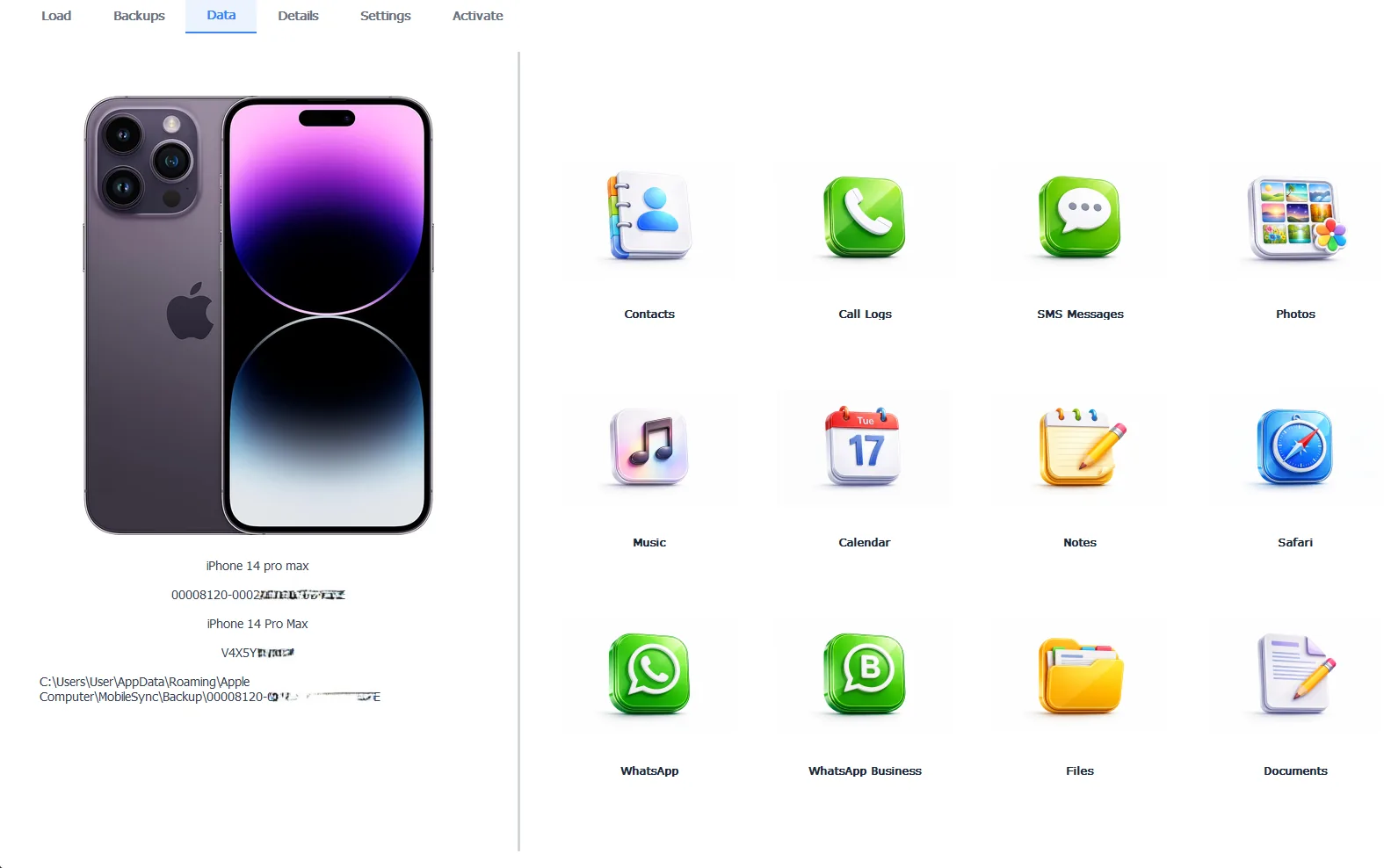
The backup confirmed readable, the green light to erase
Selling is also the perfect moment to travel light. Rather than dragging the whole old phone onto the next one, export just the conversations, photos and contacts worth keeping as files with the Pro edition at $49 per year, 100% local, the archival craft covered in our guide to saving text messages to your computer. Browsing to verify stays free regardless.
Free version previews your backup contents. Works on Windows 10 and 11.
“Nobody regrets verifying. The people who write to us heartbroken all skipped the same step, they trusted a progress bar and sold the phone. The backup turned out empty and the only copy was gone. Two minutes looking inside would have caught it while the phone was still theirs. Verify before you erase, every single time.”
Viralkumar Patel in | iData Backup Viewer Team, CYBERSICS SOLUTIONS
Step 3. Unlink the Phone from You
With the backup verified, detach the phone from your identity before wiping it. Each step keeps something with you rather than the buyer.
- Unpair an Apple Watch through the Watch app, which backs it up as it unpairs.
- Remove the physical SIM or delete the eSIM so your number stays yours.
- Sign out of iCloud last. Open Settings, tap your name, scroll down and tap Sign Out, which lifts Activation Lock so the buyer can set the phone up.
Signing out of iCloud is the move that disables Activation Lock. Erasing without it can leave the phone locked to your Apple ID and useless to the buyer, the single most common resale complaint.
Step 4. Erase It Properly
Now wipe it clean. Follow Apple’s own sell-or-trade checklist and open Settings, then General, then Transfer or Reset iPhone, then Erase All Content and Settings. This removes your data, clears your accounts and returns the phone to factory condition. The phone is ready for its next owner.
Trust the erase completely. A phone wiped this way gives up nothing to the buyer, since Erase All Content and Settings destroys the encryption keys that made your data readable. That’s also why your own recovery, if you ever need it, runs entirely through the verified backup you just made, never through the sold phone. The wider version of finding data from a phone you no longer own lives in our guide to getting data from an old iPhone.
So the safe sale is four beats in one direction. Back up completely, verify the backup with your own eyes, unlink the phone from your accounts and number, then erase it to factory clean. The buyer gets a fresh phone, you keep every photo and conversation and nobody inherits your data by accident. Moving to a new phone at the same time? Our guide to transferring to a new iPhone without iCloud picks up right here. The full recovery map lives in our iPhone data recovery hub.
Have you verified the backup or are you about to trust a progress bar with everything?
Frequently Asked Questions
Isn’t a backup enough before I sell?
A backup is step one, not the finish line. An unverified backup is a promise, not a guarantee, so the real safeguard is opening it afterward and seeing your photos and messages inside before you erase the phone. Verify, then erase.
Does Erase All Content remove everything for the buyer?
Yes, when done through Settings. Erase All Content and Settings wipes your data and disables Activation Lock, leaving the phone clean and unlinked from your Apple ID. A buyer cannot recover data from a properly erased iPhone.
What gets left behind if I only use iCloud?
Your messages, most likely. Messages never appear on iCloud.com, so an iCloud-only exit can leave your conversations reachable nowhere once the phone is gone. A verified computer backup is what captures them.
Do I need to remove the SIM and unpair my Watch?
Yes to both. Take the physical SIM or remove the eSIM, unpair an Apple Watch beforehand and sign out of iCloud last. These steps keep your number and paired devices with you, not the phone.
Can I move just the important stuff to my new phone?
Yes. Extract the specific conversations, photos and contacts you want as files, then add them to the new phone, rather than dragging the whole old life across. Selling is a natural moment to travel light.
Is verifying the backup free?
Yes. Browsing every category in the backup is free, which is exactly the confirmation step that makes selling safe. Exporting anything out as files takes the Pro edition at $49 per year, all local.
Written by Viralkumar Patel in
Viralkumar works on iData Backup Viewer at CYBERSICS SOLUTIONS, where he helps Windows users read, recover and export data from iPhone backups.