How to Read an Encrypted iPhone Backup (2026)



To read an encrypted iphone backup, you need one thing: its password. You open the backup folder expecting photos and messages. You find a wall of scrambled files with coded names. The backup is encrypted. That lock is doing its job. The good news is you hold the key. To read an encrypted iphone backup, you open it in a viewer and enter the backup password, which unscrambles everything inside. This guide shows the exact steps, explains why File Explorer is useless here and covers the one case where the backup stays locked.
Quick Answer
You read an encrypted iPhone backup by opening it in a backup viewer and entering the backup password. The password unlocks the encryption so the viewer shows the messages, photos and contacts inside. File Explorer cannot open an encrypted backup, since its files are scrambled. Without the password no tool can read it.
| Your Situation | Can You Read It? |
|---|---|
| Encrypted backup, you know the password | Yes, open in a viewer and enter it |
| Encrypted backup, password forgotten | Not until the password is recovered |
| Trying to open it in File Explorer | No, the files are scrambled |
| Unencrypted backup | Opens with no password at all |
Table of Contents
Why Can’t You Just Open an Encrypted Backup?
Encryption scrambles every file in the backup, so without the key the files are meaningless. Apple built it this way on purpose, to protect sensitive data like saved passwords and health records if someone else reaches your computer. The protection is real. File Explorer shows only coded filenames and databases it cannot open.
Even an unencrypted backup is hard to browse by hand, since its files carry hashed names rather than normal ones, the reason photos look like gibberish in the folder, explained in our guide to where iPhone backup photos are stored. Encryption adds a locked door on top of that. A viewer with the password is what opens both.
How Do You Read an Encrypted iPhone Backup?
With the password in hand, reading the backup takes three steps.
- Open the encrypted backup in iData Backup Viewer on Windows 10 or 11.
- Enter the backup encryption password when the viewer asks for it.
- Browse the decrypted messages, photos, contacts, call history and notes, then export what you need.
That is the whole job. Entering the correct password decrypts the backup on your computer. Everything inside becomes readable. The password is used only on your PC to unlock the files, never uploaded or shared. iData Backup Viewer runs 100% locally, so the data never leaves your machine.
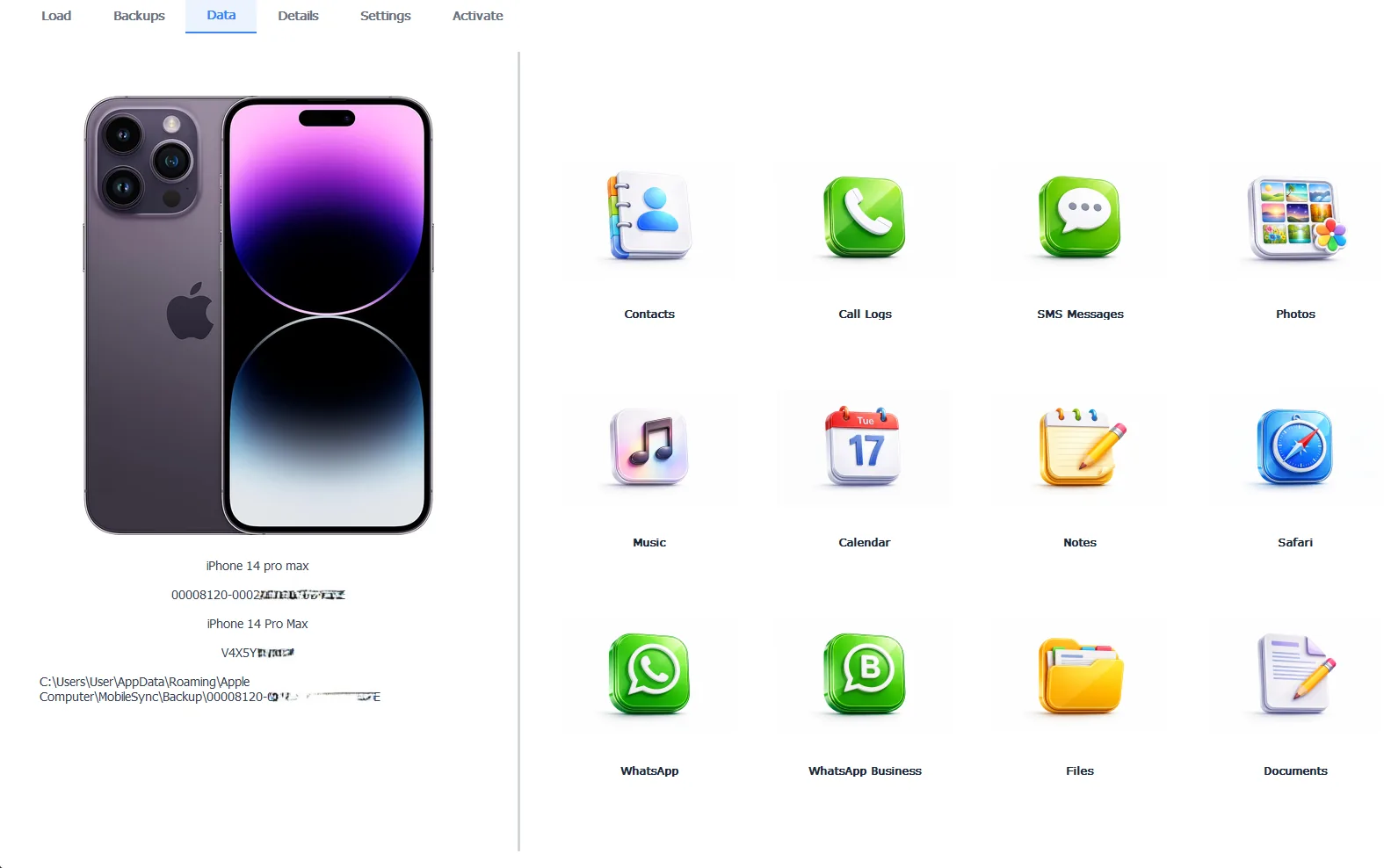
An encrypted backup decrypted and readable after the password is entered
Browsing the contents is free once the backup is unlocked, which confirms the data is there. Exporting takes the Pro edition at $49 per year. The pick-and-choose side of what you can pull out sits in our guide to selectively restoring iPhone data.
Free version previews your backup contents. Works on Windows 10 and 11.
“People see the scrambled files and think the backup is broken. It is not broken, it is locked. That is a feature. With the password it opens in seconds and shows more than an unencrypted backup ever would, saved passwords and health data included. The encryption that blocks a thief is the same encryption you walk right through with the key.”
Viralkumar Patel in | iData Backup Viewer Team, CYBERSICS SOLUTIONS
What Is the Backup Password, Exactly?
The backup encryption password trips people up because it is its own separate thing. It is not your iPhone passcode. It is not your Apple ID password either. You set it once when you turned on Encrypt Local Backup. It is stored on the device, so a backup made later by another app uses the same password.
This is why entering your passcode or Apple ID does nothing when a viewer asks for the backup password. Only the password you chose for Encrypt Local Backup will open the backup. Apple documents the whole encrypted-backup setup, including what it protects, on its page about encrypted backups.
Why an Encrypted Backup Holds More
Reading an encrypted backup is worth the password step, because it contains more than a plain one. Apple includes saved passwords, Wi-Fi settings, website history, Health data and call history in an encrypted backup. All of them stay out of an unencrypted one. The lock and the extra data come together.
So an encrypted backup is both safer and richer. Once you read it, you reach data that no unencrypted backup ever held, the full included-and-excluded picture laid out in our breakdown of what is inside an iPhone backup. For anyone making new backups, our guide to backing up an iPhone to a computer explains why turning encryption on is the better choice.
What If You Forgot the Password?
This is the one case where an encrypted backup stays shut. No honest tool bypasses the encryption, so without the password the contents cannot be read. That is the security working as intended, even when it works against you.
The password itself can sometimes be recovered though, which is a different task from bypassing the lock. Known-password guesses, a dig through your password managers and browsers, plus a reset for future backups each offer a path, all mapped in our complete iTunes backup password guide. Keep the locked backup either way, since a remembered password can open a years-old backup at any time. The wider map of recovery lives in our iPhone data recovery hub.
Reading an encrypted iPhone backup comes down to a few plain points:
- File Explorer cannot open an encrypted backup, since its files are scrambled.
- A viewer plus the backup password decrypts and shows the contents in seconds.
- The backup password is separate from your iPhone passcode and Apple ID.
- No password means no access, though the password can sometimes be recovered.
⬇ Open Your Encrypted Backup Free
Do you have the backup password ready or is recovering it the first step?
Frequently Asked Questions
Can I open an encrypted iPhone backup in File Explorer?
No. An encrypted iPhone backup is a folder of scrambled files with coded names, so File Explorer shows only unreadable data. Reading the contents needs a backup viewer that accepts the backup password and decrypts the files on your computer.
Do I need the password to read an encrypted backup?
Yes. The backup password is what protects an encrypted backup, so reading it requires that password. With the password, a viewer decrypts and shows the contents. Without it, no honest tool can open the backup, which is by design for your security.
Is the encrypted backup password the same as my iPhone passcode?
No. The backup encryption password is set separately from your iPhone passcode and your Apple ID password. It is specific to the backup. Entering your passcode or Apple ID will not open an encrypted backup, only the backup password will.
Does an encrypted backup hold more than an unencrypted one?
Yes. An encrypted backup includes saved passwords, Wi-Fi settings, website history, Health data and call history that an unencrypted backup leaves out. Reading an encrypted backup reaches this extra data that a plain backup never contained.
Is my password safe when I enter it in a viewer?
In a local viewer, the password is used only on your computer to unlock the backup and is not uploaded or shared. iData Backup Viewer runs 100% locally, so the password and the data never leave your PC.
What if I forgot the encrypted backup password?
Without the password, the backup cannot be read, but the password itself can sometimes be recovered. Known-password guesses, password managers and a reset for future backups each offer a way forward, covered in a dedicated password guide.
Written by Viralkumar Patel in
Viralkumar works on iData Backup Viewer at CYBERSICS SOLUTIONS, where he helps Windows users read, recover and export data from iPhone backups.
Last updated October 2026