iPhone Backup Not Recognized on a New iPhone? Fixes



New iPhone on the desk, old life ready to move in. Then the backup you carefully made is nowhere in the list. An iphone backup not recognized during launch week setup almost never means a dead backup. The new phone is looking in the wrong place or running slightly older iOS than the backup. Both take minutes to fix once you know which one you’ve got.
Summary
When an iPhone backup is not recognized, confirm the backup exists on this computer under this Windows user, move it into the folder your current app reads and update the new iPhone’s iOS before restoring. Launch phones ship on older software than the backups made hours before them.
| The Symptom | The Likely Cause |
|---|---|
| Backup list is empty | Wrong PC, wrong user or wrong folder |
| Backup greyed out or refused | New phone’s iOS is older than the backup |
| Listed but the password fails | Encrypted backup, password problem |
| You’re not sure it was ever made | Check the Devices list first |
Table of Contents
Where Does the New iPhone Look for Backups?
The new phone never looks anywhere itself. During setup it asks the connected computer’s iTunes or Apple Devices app for a list. Each app reads exactly one folder, its own MobileSync Backup location. Desktop iTunes keeps one path, the Store version and the Apple Devices app keep another, the split mapped in our guide to finding iPhone backups on Windows 11.
That single fact explains most empty lists. The backup exists, made by the app you used last year, while the app you installed this week reads its own, emptier folder. Nothing died. Two programs are keeping separate shelves.
Why Is the iPhone Backup Not Recognized?
The shelf problem, as above. Wrong app, wrong Windows user profile or wrong computer entirely, with the backup sitting healthy somewhere nobody’s looking.
The calendar problem. A launch iPhone ships with the iOS it was boxed with weeks ago. Your backup came from a phone updated the night before. Backups never restore onto older iOS, the one-way rule Apple documents, so the brand new phone refuses a backup made hours earlier. Launch week manufactures this mismatch by the millions.
The existence problem. The backup you remember making sometimes turns out to be a sync from 2023. iTunes lists what it truly holds under Edit, then Preferences, then Devices, names and dates included. Trust that list over memory.
How Do You Make the Backup Show Up?
- Confirm the backup exists. Check the Devices list on every computer the old phone ever met, under every Windows user, in both Windows paths.
- Reunite backup and app. Copy the whole hashed device folder into the MobileSync Backup path your current app reads, then reopen the app. The backup joins the list.
- Update the new iPhone. Settings, then General, then Software Update, done before any restore attempt. A fully updated phone accepts every backup in existence.
- Turn off Find My on the new phone for the duration of an iTunes restore.
- Restore, following the cross-device playbook in our guide to restoring a backup to a different iPhone.
What If the Backup Shows but the Restore Fails?
Recognition and restoration are different hurdles. A listed backup that fails with a corruption or compatibility verdict follows the repair ladder in our guides to the corrupt or not compatible error and fixing a corrupt iTunes backup. A listed backup demanding a password nobody remembers follows the escape routes in the backup password guide. Either way the backup stays on the computer, unharmed by the failed attempts.
How Do You Move In Without the Restore?
Launch day doesn’t wait on stubborn restores. It doesn’t have to. iData Backup Viewer opens the unrecognized backup straight from its folder on Windows 10 or 11, wherever it sits, no list membership required. Two minutes of browsing confirms it’s the right backup with the right contents, the messages, photos and contacts all present, free.
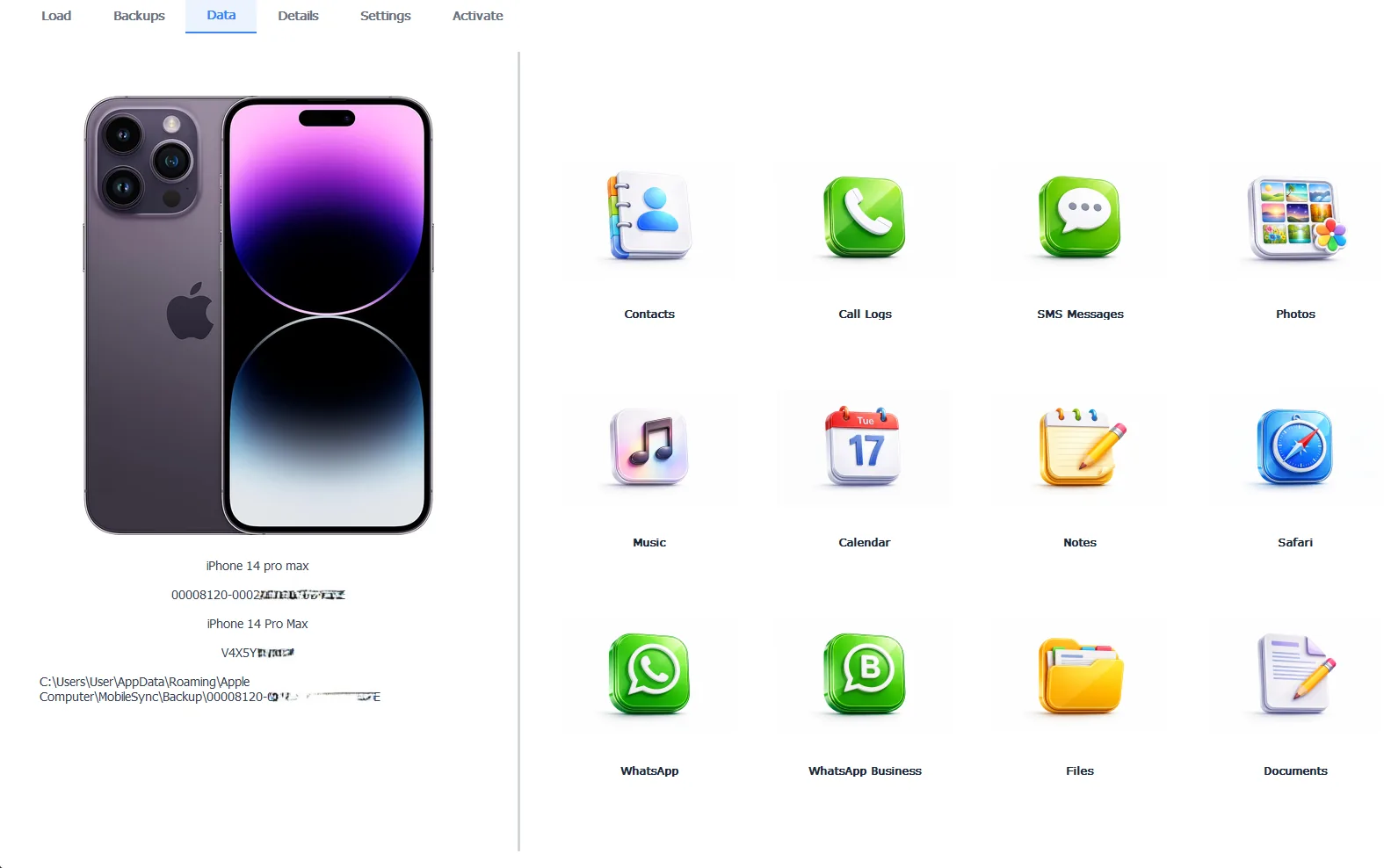
The unrecognized backup, opening fine outside the list
From there, set the new phone up fresh and pull across what matters. Move the contacts, the photo folders and the conversations exported as files using the Pro edition at $49 per year, all 100% local. Some launch-week movers choose this on purpose, taking the clean-start migration our guide to moving to a new iPhone without iCloud weighs against the full restore.
Free version previews your backup contents. Works on Windows 10 and 11.
“Every launch week we watch the same trap close. The old phone updates Monday, backs up Tuesday, the new phone arrives Wednesday running August’s software and refuses Tuesday’s backup. Nobody did anything wrong. Update the new phone before the restore and the trap never springs.”
Viralkumar Patel in | iData Backup Viewer Team, CYBERSICS SOLUTIONS
So work the short list. Find which shelf holds the backup and reunite it with the app in use. Update the new phone past the backup’s iOS and switch Find My off for the restore. When the list still won’t cooperate, open the backup directly and move in by hand. Every other rescue road lives in our iPhone data recovery hub.
Is the new phone actually running newer iOS than the backup it’s refusing?
Frequently Asked Questions
Why doesn’t my backup appear during new iPhone setup?
The setup screen shows whatever backups the computer’s app can see, so a backup sitting on another PC, under another Windows user or in the folder a different app uses stays invisible. Finding the folder and putting it where your current app looks brings it back.
My new iPhone shipped with older iOS than my backup. What now?
Update the new phone first. Launch phones ship with the software they were boxed with, so a backup from a later point release gets refused until Settings, General, then Software Update catches the new phone up.
Can I copy the backup over from another computer?
Yes. Copy the entire device folder, the one with the long hashed name, onto the new computer into the MobileSync Backup path your app reads. The backup then appears in the list like a local one.
Does iTunes list every backup on the PC?
No, only the backups in its own location. Desktop iTunes and the Store or Apple Devices versions each read their own folder, which is how a PC can hold a backup its current app never mentions.
Does Find My iPhone block the restore?
Via iTunes, yes. Turn off Find My on the new phone under Settings, your name, then Find My before restoring, then turn it back on after.
The backup is listed but the restore refuses to run. Why?
Two families of causes. A corruption or compatibility verdict has its own repair ladder. An encrypted backup with a lost password has its own escape routes. Each gets a full guide linked above.
Written by Viralkumar Patel in
Viralkumar works on iData Backup Viewer at CYBERSICS SOLUTIONS, where he helps Windows users read, recover and export data from iPhone backups.