iPhone Not Showing Up in iTunes? 7 Fixes for Windows



Phone plugged in, charging happily, and iTunes acts like nothing happened. An iPhone not showing up in iTunes on Windows comes down to a short list of causes, and they’re fixable in order from thirty seconds to five minutes. Work through these seven and the connection comes back for almost everyone.
Summary
When your iPhone is not showing up in iTunes, unlock the phone, use a data capable cable in a direct USB port and answer the Trust prompt. Still nothing? Update the Apple Mobile Device driver in Device Manager, restart the Apple Mobile Device Service and update iTunes, or switch to the Apple Devices app on Windows 11.
| Symptom | Most Likely Cause |
|---|---|
| Charges, no chime, nothing in iTunes | Charge only cable or dead USB port |
| Chime plays, still nothing in iTunes | Driver or the Apple Mobile Device Service |
| No Trust prompt ever appears | Phone locked, or an old Don’t Trust choice stuck |
| Appears, then vanishes seconds later | Failing cable, hub or a security software conflict |
Table of Contents
- Why Is Your iPhone Not Showing Up in iTunes?
- Fix 1 to 3. Cable, Unlock and the Trust Prompt
- Fix 4. Update the Apple Mobile Device Driver
- Fix 5. Restart the Apple Mobile Device Service
- Fix 6. Updates and Security Software
- Fix 7. When Nothing Above Works
- What to Do the Moment iTunes Sees the Phone
- Frequently Asked Questions
Why Is Your iPhone Not Showing Up in iTunes?
Five layers sit between your iPhone and iTunes, and any one of them can drop the connection. The physical layer, meaning cable and port. The permission layer, meaning the unlock and the Trust prompt. The driver that lets Windows talk to Apple hardware. The background service that iTunes relies on. And the software versions of everything involved.
Apple’s own checklist in its guide to a computer not recognizing your iPhone runs the same layers. The fixes below take them in order of speed, cheapest first.
Fix 1 to 3. Cable, Unlock and the Trust Prompt
Fix 1. Prove the physical layer. Plug the cable straight into the PC, skipping hubs and front panel ports. Then swap the cable for one you know moves data, since charge only cables power the phone while carrying zero data. The phone chiming or vibrating on connection is your sign the wire works.
Fix 2. Unlock the phone to its Home Screen. A locked iPhone keeps its data sealed from the PC. Unlock it before connecting and leave it unlocked for the first handshake.
Fix 3. Answer the Trust prompt, or resurrect it. Tap Trust when it appears. If it never appears, someone tapped Don’t Trust once and the phone remembers. On the iPhone, open Settings, then General, then Transfer or Reset iPhone, then Reset, and choose Reset Location and Privacy. Reconnect and the prompt returns. Your data stays untouched, only permission choices reset.
Fix 4. Update the Apple Mobile Device Driver
The driver breaks more connections than everything else combined, and Windows updates knock it over regularly.
- Connect the unlocked iPhone, then right click the Start button and open Device Manager.
- Expand Portable Devices and find your iPhone in the list.
- Right click it, choose Update driver, then Search automatically for updated driver software.
- Restart the PC and reconnect the phone.
Using the apple.com version of iTunes? The driver also lives at %ProgramFiles%\Common Files\Apple\Mobile Device Support\Drivers, and pointing a manual driver update at that folder reinstalls it cleanly. The Microsoft Store version of iTunes updates its driver through the Store on its own.
“When a Windows PC ignores an iPhone, the Apple Mobile Device driver is the culprit more than everything else combined. The phone is fine, the cable is fine, and one driver a Windows update knocked over sits between them. Five minutes in Device Manager brings it back.”
Viralkumar Patel in | iData Backup Viewer Team, CYBERSICS SOLUTIONS
Fix 5. Restart the Apple Mobile Device Service
Desktop iTunes leans on a background service, and when it stalls the phone never appears. Apple documents the restart in its AMDS guide for Windows.
- Close iTunes and disconnect the iPhone.
- Press Win+R, type services.msc and press Enter.
- Right click Apple Mobile Device Service and open Properties.
- Set Startup type to Automatic, click Stop, then click Start, then OK.
- Restart the PC, open iTunes and reconnect the phone.
Fix 6. Updates and Security Software
Old software drops new phones. Update iTunes, update Windows and update the iPhone’s iOS, then try again. Each new iPhone generation needs support the old versions never heard of.
Security software earns its own mention. Firewalls and antivirus tools sit between iTunes and the phone, and pausing them for one connection attempt tells you instantly whether they’re the wall. The same interference causes failed backups later, which our guide on the corrupt or not compatible backup error covers in depth.
Fix 7. When Nothing Above Works
Three moves remain. On Windows 11, install the Apple Devices app from the Microsoft Store and retire iTunes for device duty, since the newer app brings its own current driver and skips years of iTunes baggage. Try a different PC to split the problem in half, because a phone that appears elsewhere clears the phone and blames the first computer. And inspect the phone’s charging port for debris, since a pocket’s worth of lint blocks the data pins while charging limps along.
A phone that no computer recognizes on any cable is a hardware conversation, and the honest next stop is a repair bench rather than more software.
What to Do the Moment iTunes Sees the Phone
Don’t just sync and unplug. A connection that failed once will fail again, so bank the win. Back the phone up now with Encrypt local backup ticked, following our full walkthrough on backing up an iPhone to a computer. That snapshot protects you no matter what the connection does next month.
Then confirm the backup is real. iData Backup Viewer opens it on Windows 10 and 11 and previews the messages, photos and contacts inside free, reading straight from the backup folder covered in our guide on where iPhone backups are stored on Windows. A timestamp says a backup ran. The preview shows your data actually made it.
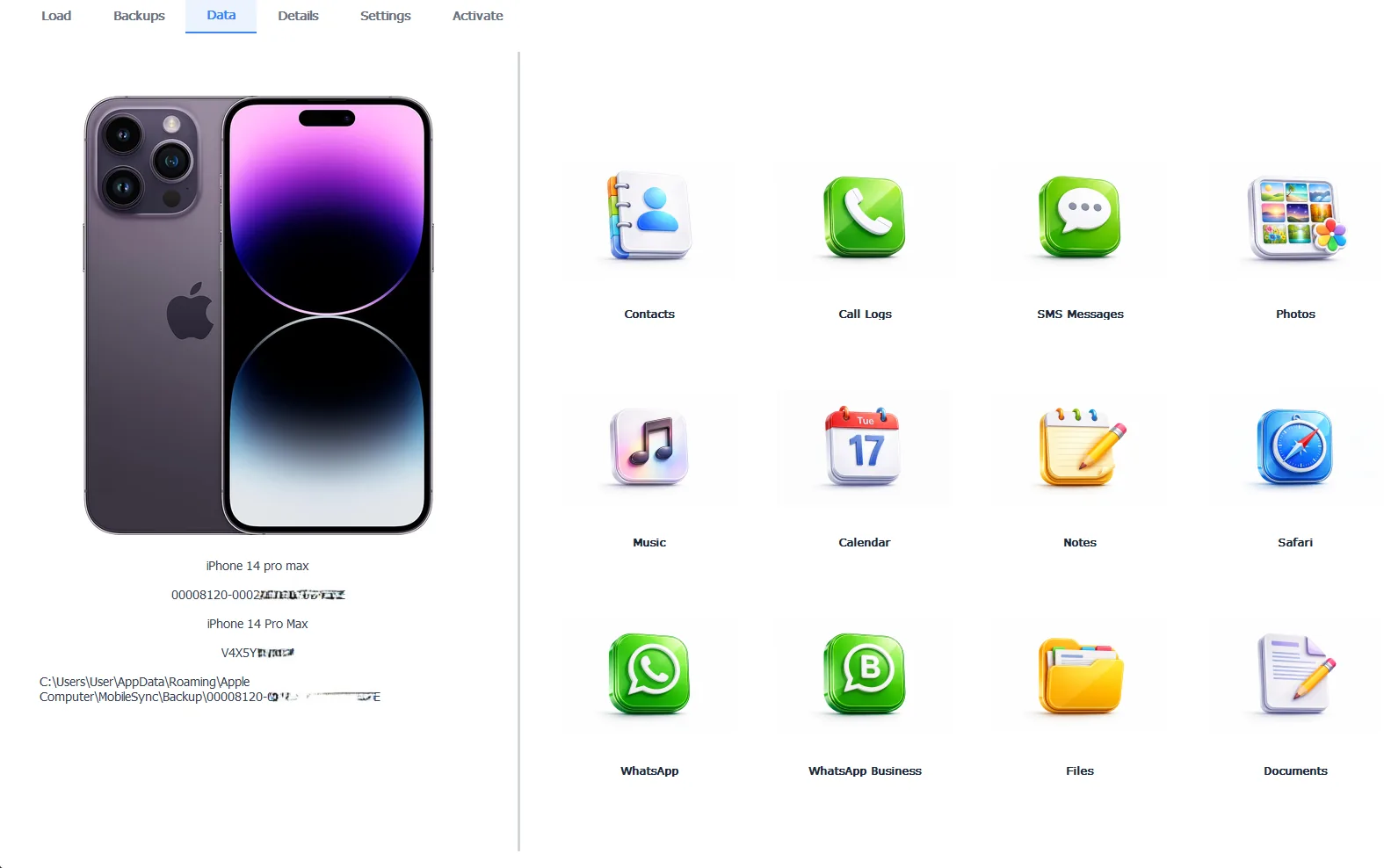
The reward: a verified backup, browsable by category on your PC
The preview stays free. The Pro edition at $49 per year adds exports for the day you need data out, with everything running 100% locally.
Free version previews your backup contents. Works on Windows 10 and 11.
So run the ladder. Cable and port, unlock and Trust, driver, service, updates, then the Apple Devices app as the fresh start. Somewhere on that ladder the connection returns, and the first thing worth doing with it is a backup you’ve verified with your own eyes.
Which rung fixed it for you, and when did that phone last get a backup that you’ve actually looked inside?
Frequently Asked Questions
Why does my iPhone charge but not appear in iTunes?
Charging and data run on different wires. Charge only cables carry power and nothing else, and a damaged data line fails the same way. Swap to a cable you know transfers files, plugged straight into the PC.
Do I even need iTunes on Windows 11?
No. The free Apple Devices app from the Microsoft Store handles backups, restores and updates on Windows 11, and it installs its own current driver. When iTunes fights you, switching apps beats fighting on.
Where is the Apple Mobile Device driver located?
For the apple.com version of iTunes, the driver sits at %ProgramFiles%\Common Files\Apple\Mobile Device Support\Drivers. The Microsoft Store version of iTunes and the Apple Devices app manage their driver through the Store instead.
Will resetting Location and Privacy delete my data?
No. The reset clears permission choices, including every Trust decision, so the Trust prompt appears again on the next connection. Your photos, messages and apps stay exactly where they are.
The PC chimes when I plug in, then nothing appears. What now?
A chime means the port and cable delivered a connection, which points at software. Restart the Apple Mobile Device Service, update the driver in Device Manager and unlock the phone to its Home Screen before plugging in.
iTunes finally sees my phone but the backup fails. What next?
You’ve moved from a connection problem to a backup problem, which has its own fixes. Security software, disk space and a broken older backup cause most failures, and the corrupt backup guide covers each one.
Written by Viralkumar Patel in
Viralkumar works on iData Backup Viewer at CYBERSICS SOLUTIONS, where he helps Windows users read, recover and export data from iPhone backups.