How to Restore an iPhone from a Backup (iTunes and iCloud)



New phone, erased phone or a phone gone wrong, the fix is the same. You restore the iPhone from a backup and life resumes. Apple gives you two official routes, and there’s a third route almost nobody mentions for the times a full restore is the wrong tool. Here’s all three, with the traps marked.
Summary
To restore an iPhone from a backup, connect it to your PC and use iTunes or the Apple Devices app, or erase the phone and pick Restore from iCloud Backup during setup. Both replace everything on the device. To recover specific items without wiping anything, extract them from the backup on your PC instead.
| Method | Use It When | Wipes the Phone? |
|---|---|---|
| Computer restore (iTunes or Apple Devices) | A backup exists on your PC and you want the full comeback | Replaces the phone’s contents |
| iCloud restore | No PC backup exists and iCloud has one | Yes, the phone must be erased first |
| Selective extraction on the PC | You need specific messages, photos or contacts only | No, the phone is never touched |
Table of Contents
Which Restore Method Should You Use?
Pick by what you’re trying to get back. A full restore rebuilds the entire phone from a snapshot, which is exactly right for a new or freshly erased device. It’s exactly wrong when you only need a few things back, because the price of a full restore is everything currently on the phone.
So ask one question first. Do you want the whole phone as it was, or specific data out of the backup? The whole phone means one of Apple’s two restores below. Specific data means the extraction route, and your current phone stays exactly as it is.
How Do You Restore an iPhone from a Computer Backup?
This is the fastest full restore because the data moves over a cable instead of Wi-Fi. It needs a backup on the PC, and our guide on where iPhone backups are stored on Windows confirms in seconds whether one exists.
- Connect the iPhone to the PC with a cable and tap Trust on the phone if asked.
- Open iTunes on Windows 10, or the Apple Devices app on Windows 11.
- Select your device, then choose Restore Backup.
- Pick the backup by date. Enter the backup password if it’s encrypted.
- Keep the phone connected until it restarts and finishes syncing. Unplugging midway causes the exact corruption problems you’re trying to avoid.
One rule trips people constantly. The phone must run an iOS version equal to or newer than the backup. When it doesn’t, you get the not compatible message, and the fix is updating the phone first, not abandoning the backup.
How Do You Restore from an iCloud Backup?
The iCloud route works from anywhere with Wi-Fi and demands a bigger commitment upfront. The phone has to be erased before the option even appears.
- On the iPhone, open Settings, then General, then Transfer or Reset iPhone, and choose Erase All Content and Settings.
- When the phone restarts, follow setup until the Apps and Data screen appears.
- Choose Restore from iCloud Backup and sign in with your Apple Account.
- Pick the most relevant backup by date and size.
- Stay on Wi-Fi and powered. The essentials arrive first, and apps plus media keep downloading in the background afterward.
Because everything travels over Wi-Fi, large backups take hours. Start it overnight when the backup runs big.
What If You Don’t Want to Wipe Your Phone?
Here’s the route Apple never offers. A restore is all or nothing, and most people reaching for it want three conversations, one photo album or a handful of contacts. That’s not a restore job. iData Backup Viewer opens the backup on Windows 10 and 11 and copies out exactly what you pick, while your phone keeps living its current life.
- Install iData Backup Viewer on the PC holding the backup. It finds backups in both Windows locations on its own.
- Select the backup, entering its password if encrypted.
- Browse messages, photos, WhatsApp chats, contacts, call history and notes by category.
- Export just the items you need as PDF, HTML, CSV or original files.
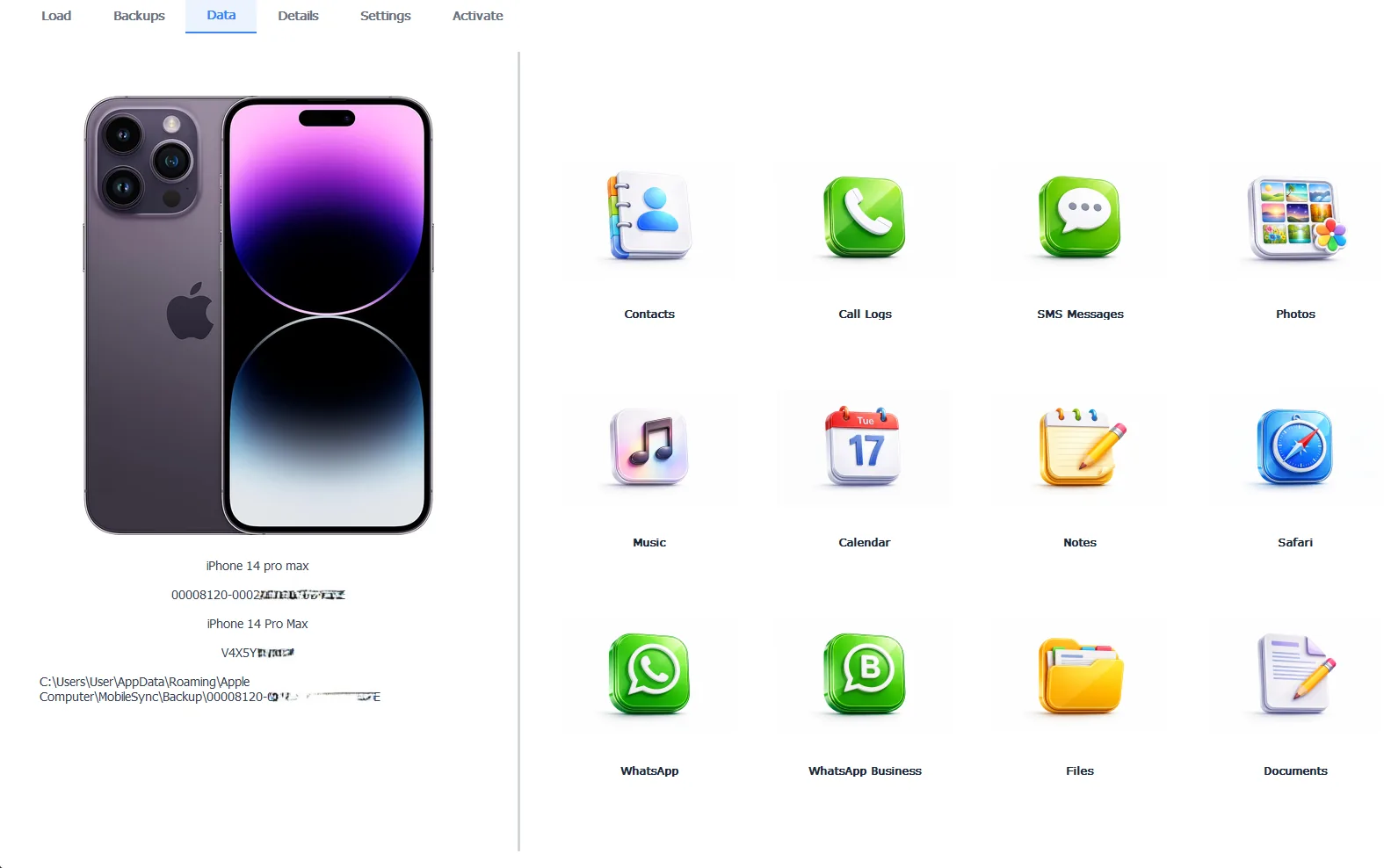
Step 3: iData Backup Viewer browsing backup contents by category before a selective export
The free version previews the whole backup first, so you confirm the data is there before anything else. The Pro edition at $49 per year unlocks exports, and processing stays 100% local on your PC.
Free version previews your backup contents. Works on Windows 10 and 11.
“Apple’s restore is a sledgehammer. It swings the whole backup at the whole phone, and everything currently on the device goes. Half the people who ask us about restoring don’t want that at all. They want three conversations and an album back. That’s an extraction job, not a restore.”
Viralkumar Patel in | iData Backup Viewer Team, CYBERSICS SOLUTIONS
What If the Restore Fails?
Two failures dominate. The not compatible message means the backup needs a newer iOS than the phone runs, and updating the phone fixes it. The corrupt message means a validation check failed, and in many cases the files inside are fine behind a damaged index. Our full guide on the corrupt or not compatible backup error walks through both fixes step by step.
For everything else, cables, security software and outdated apps cause most of the rest. Apple’s own backup and restore troubleshooting guide covers those checks.
Protect the backup before you retry anything
When a restore keeps failing, copy the entire backup folder to a safe location before more attempts. And never accept a prompt to delete the backup while it holds the only copy of your data. Extract the contents first, then let iTunes do what it wants.
What Won’t a Restore Bring Back?
Set expectations before the progress bar finishes. Content that syncs through iCloud, like iCloud Photos, comes back from iCloud rather than from the backup, so it reappears only after you sign in and it downloads. We covered how that catches people in our guide on extracting photos from an iPhone backup.
Apps download fresh from the App Store with their data restored from the backup. And anything deleted before the backup was made isn’t in the snapshot at all, which no restore can change.
So match the tool to the goal. A computer restore rebuilds the phone fastest, the iCloud restore rescues you with nothing but Wi-Fi, and selective extraction gets specific data back without sacrificing a single thing currently on your phone.
Do you want the whole phone back, or just the parts that matter?
Frequently Asked Questions
Does restoring from a backup erase my iPhone?
Yes, treat it that way. A computer restore replaces the phone’s current contents with the backup, and an iCloud restore requires erasing the phone before it even starts. Anything created after the backup date disappears either way.
Can I restore a backup to a different iPhone?
Yes. Backups aren’t locked to one device. An encrypted backup asks for its password on the new phone, and the new phone must run an iOS version equal to or newer than the backup.
How long does a restore take?
It scales with backup size and connection. A computer restore over USB finishes faster than an iCloud restore over Wi-Fi, and large backups stretch into hours. Keep the phone connected and powered the whole time.
Can I restore only my messages or my photos?
Not with Apple’s tools. A restore is all or nothing. To get specific items, extract them from the backup on your PC instead, which copies out what you pick and leaves the phone untouched.
Why does the restore say the backup is corrupt or not compatible?
Not compatible means the backup came from a newer iOS than the phone, so update the phone first. Corrupt means iTunes failed a validation check, and the data inside is recoverable in many cases. Both have fixes before you give up on the backup.
Do my apps come back after a restore?
Your app data comes from the backup, and the apps themselves download fresh from the App Store afterward. Icons appear dimmed while downloads finish, which is normal.
Written by Viralkumar Patel in
Viralkumar works on iData Backup Viewer at CYBERSICS SOLUTIONS, where he helps Windows users read, recover and export data from iPhone backups.